

CIVIL SERVICE WITNESSES: LUDOVICA'S STORY
“Roots of Change”, di Ludovica Voerzio, Servizio Civile, Lago Agrio (Ecuador)
A few months ago, I crossed the Atlantic to arrive in Ecuador, a country and part of the world completely unknown to me, yet one that has always held a certain fascination for me.
Ecuador is certainly not the most idyllic place to live, especially over the past two years, given the deep social and political instability that increasingly makes it difficult to experience the country in a carefree and safe way.
Safety and risk are certainly two of the aspects I have been living with most since the beginning of my service. I am located in the province of Sucumbíos, specifically in Lago Agrio, a city in the Amazonian region of the country, in the northeast, right on the border between Ecuador and Colombia. Sucumbíos has always been a deeply unstable and vulnerable territory in multiple respects—environmentally, socially, and economically. Its proximity to the border exposes the province to the presence of drug traffickers and illegal armed groups, which increase uncertainty and levels of violence in the area. Moreover, since the 1970s, Lago Agrio has been associated with oil extraction and the consequent environmental damage, including soil, air, and river contamination, as well as irreversible harm to Amazonian biodiversity.
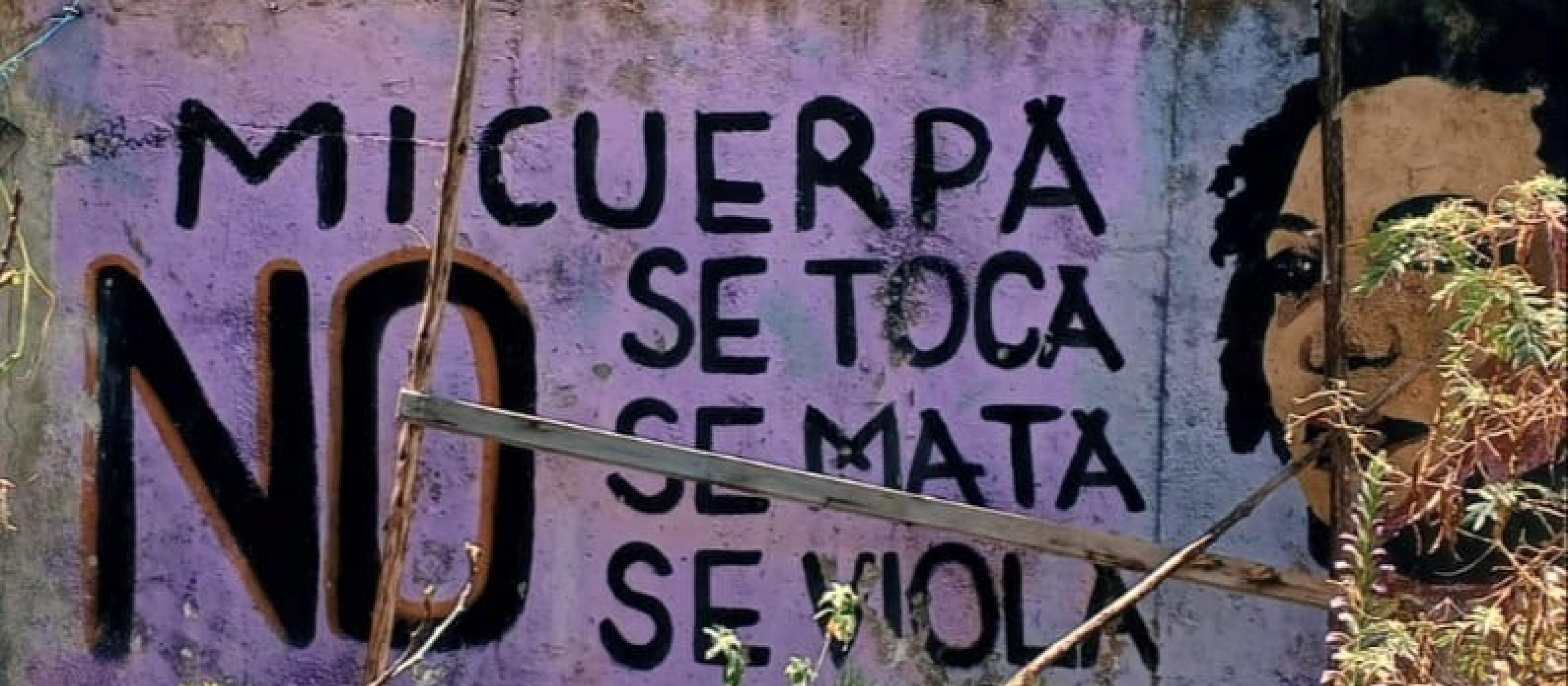
I find myself in this complex and not always easy-to-digest context because I chose to serve in the universal civil service with an organization headquartered right in this city: the Federación de Mujeres de Sucumbíos (FMS). FMS has been active in the region for almost 40 years and is the largest women’s federation in all of Ecuador. It carries out fundamental work locally, especially given the neglect this area of the country has historically faced. The organization is dedicated to promoting women’s rights and their active participation in the community, gender equality, and sustainable development, particularly in the most rural areas. FMS operates on two interconnected fronts. The first is the elimination of all forms of gender-based violence, developed primarily through the external support center “Puerta Violeta,” where women, adolescents, and children can receive help in cases of abuse and violence. The second is the shelter “Casa Amiga,” which offers a safe space where women and their children can live while also accessing programs for guidance and healing.
The second branch focuses on women’s empowerment, aiming to help women achieve economic independence through the creation of small businesses and specialized training. This training ranges from academic knowledge acquisition to courses designed to understand and manage daily situations of violence, as well as to recognize and ideally prevent it, providing women with all the tools necessary to protect themselves. One of the aspects that fascinates me most about the empowerment branch is the network of women-only organizations that FMS has gradually built over the years. About a hundred organizations across the region are affiliated with FMS, working collaboratively to assert their presence and reclaim their space as active participants in society.
Specifically, during this period, I have had the opportunity to work with women entrepreneurs, supporting their professional development and strengthening their capacities to create, market, and sell products and services. I have assisted in training initiatives and supported the activities of several local women’s organizations, allowing me to gain a deeper understanding of the realities surrounding me—including the most difficult and challenging aspects, but also the full potential of this context. My work also includes planning and overseeing awareness-raising events about social inequalities, communication, exchange of experiences, and promotional activities to further encourage the work of our women entrepreneurs. As I mentioned before, this experience is certainly not easy or straightforward; quite the opposite. It is full of highs and lows, with some days so challenging that you feel like giving up, and other days so rewarding and inspiring that you truly understand the value of this experience. Yet I realize how profoundly this journey is shaping me, teaching me the importance of community as a tool for change and for improving the lives of those around us. At the beginning, there was a feeling of uncertainty, perhaps even anxiety. Traveling to a foreign country, far from one’s comfort zone, is a step that can be intimidating. The culture and social context are new and unfamiliar. At the same time, there is a mixture of curiosity and apprehension, wondering whether one will be able to adapt and immerse oneself in this new reality. Although I still have time ahead of me in this service, I feel enriched with information, knowledge, emotions, and experiences, as well as with an expanded perspective of the world I know, which is allowing me to discover more about myself, both as a person and as a woman.