
CIVIL SERVICE WITNESSES: LAURA'S STORY
“Our daily struggle takes place in classrooms, with the children”, di Laura Grimozzi, Servizio Civile Universale, Quito (Ecuador)
There is no doubt about it: Quito is a city that, for me, is as beautiful as it is complex and dangerous. Yet, the place where I wisely and fortunately chose to throw myself into was able to give me immediate courage. I am talking about the Yachay Wasi school: a small, safe, free, and powerful space on the outskirts of the capital, which gives children a childhood and an education that cannot be considered just a luxury, but a precious and unique gift, both for them and for us volunteers who work there.
When people ask me what it's like to live here, I always reply that it's intense. Intense are the days that start at five in the morning, intense are the hours of lessons I teach every day, intense are the conversations you hear every day in the school environment, and intense is this country that is not afraid to fight.
Right now, we are surrounded by protests: what is known here as the Paro Nacional has begun, a form of mobilization that consists of blocking city streets for days and nights indefinitely. This time (because there have been several over the years, some of them very important), everything was triggered by the crazy increase in the price of diesel, but in a very short time the situation became much more dramatic, to the point of having to say goodbye to citizens who were arrested and murdered because they were protesting.
I don't want to go into detail about all this, but it's clear that life here in Ecuador is not easy for many reasons. For us volunteers, it means knowing that any day could be the day we get robbed, or that after 6 p.m. no one is allowed to walk the streets because it's too dangerous. For Ecuadorians, however, life is much harder, especially if they are indigenous, mestizo, or black.
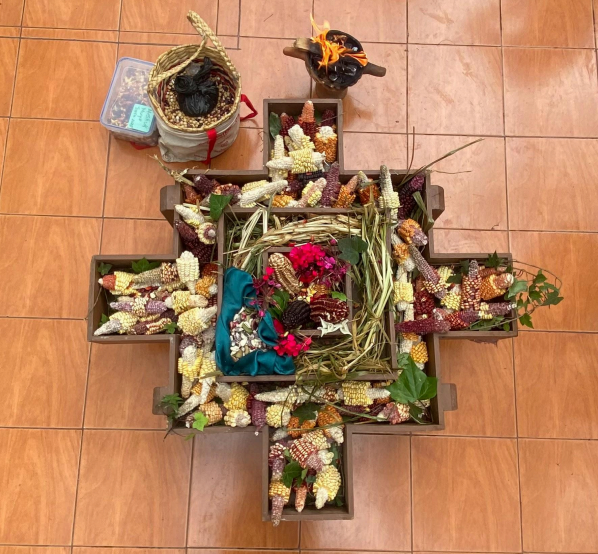
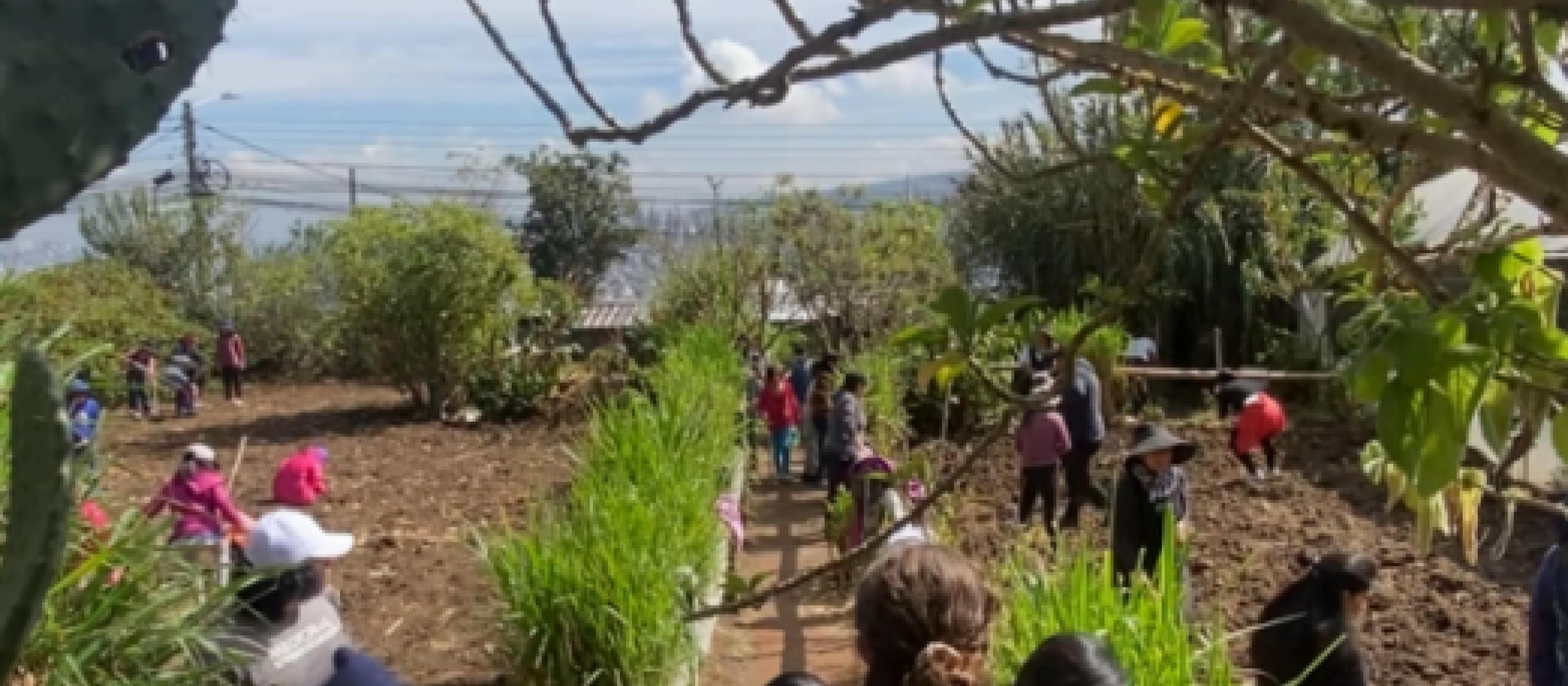
The Yachay Wasi school, however, is a different battlefield. It is the battlefield of mashi (companion in Kichwa) Ninari, mashi Laurita, and mashi Fernando who, after years of struggle, have created this powerful space. A bilingual school (Spanish and Kichwa), the only one that is openly anti-racist in the whole of Abya Yala (Latin America), which today, under the direction of mashi Ninari, carries out a comprehensive program of awareness-raising, sensitization, and education for the children who grow up in this corner of paradise. Through rituals, speeches, morning activities, and daily tasks, they show, without filters, the desire for redemption, the anger, and the strength of a people, the indigenous people, who have suffered, who have been sidelined for too long, who are afraid but know how to recognize it with courage, without allowing this fear to stop them. They do not want to forget, and they do not want to be forgotten.
Every day, I can't help wondering what I would be like today if I had been lucky enough to grow up in a school with such revolutionary teaching methods, just as I can't help wondering what the adults of the future will be like, having grown up in this school environment. Here, if children see you crying, they run to hug you; if you tell them you are tired, they build you a bed of pillows; if they see a classmate falling, they don’t laugh at them but promptly make sure that everything is okay; and, at the same time, they know how to recognize patriarchy, racism, oppression, and much more. I don't know how many children between the ages of six and thirteen in the world can boast such awareness.
The only thing I can add, to conclude this short testimony—too brief to truly convey what I am experiencing—is that I am infinitely grateful to have this second chance to learn and relearn every day alongside them.